Category: Education

Education Articles for 2012

  • Feed Essay for English 102 – Comparison Style – MLA Format

    Feed Essay for English 102 – Comparison Style – MLA Format

    Tony Washington
    Professor Elisa Parrett
    English 102
    4 May 2016

    Feed Comparison Essay – MLA Format – English 102

    Requirements:

    • Minimum of 1000 words
    • MLA Format
    • Works Cited page

    Assignment:
    Using evidence from Feed and at least one article assigned in class, compare and/or contrast Titus’ society with our own society, noting whether the similarities or differences between our society and Titus’ society primarily indicate something negative or positive about each one.

    Introduction

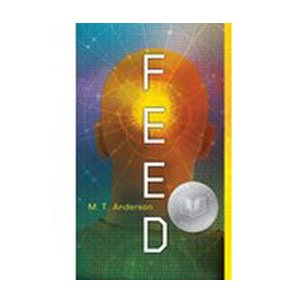
    There are many stories and novels available to readers that capture our imagination, spark creative ideas and lead us to think more critically about the world and people around us. One such story that sparked some interesting thoughts for me can be found in the fictional novel “Feed” written by Matthew T. Anderson. The main character is named Titus and the book follows him and his friends living their lives in a future world where it is considered standard practice to have a feed device implanted into the body. The feed allows its users to access and receive virtually any kind of media or entertainment, communicate without speaking directly to each other, instantly lookup just about anything they can dream of and even know when their parents are sleeping. With that said, there are many issues and themes throughout the book that can be related back to today’s popular culture. In comparing our society to that found in the Feed we start to see similarities to our very own society in the United States.  The story of feed shows how societies overuse of technology may harm, suppress, or stop all-together the development of unique individual ideas or thoughts and even the human element itself.

    Body

    One consequence of overusing technology is that it may pressure others into abandoning their own convictions in favor of the social majority consensus. There are clear instances of pressure for those to confirm to ideal “social norms” and this is made apparent even for Violets Dad, whom initially rejected the entire idea of the Feed technology for himself and family; being he was a staunch believer that the Feed was not needed and they could get by just as well without it. This was until he was denied a lucrative job after company associates discovered he himself did not have a feed, which “They found this funny. Risible. That a man would not have a feed.” (Anderson, p. 288). At that moment he had a realization that his daughter, Violet, would require the feed in order to be successful in the world. This being only after his newfound thoughts after meeting with said associates. With everyone around him having the feed this put social pressure on him, eventually leading him submit to the social norms and bypass his own belief and conviction that the feed was not a necessary technology. Keep in mind that Violets Dad himself gets a feed device, albeit an old school one that was put on the back. This illustrates how the feed becomes a negative and hinders development of the individual thought due to being socially pressured to adopt a technology.

    We can see similar instances in our own society in the United Sates where social pressures are being amplified by technology, such as social media sites that may lead others to submit to the popular or majority social consensus. Take for example being thin in America appears to be the popular thinking to view how attractive a woman is. Social pressures to be thin can put stress on young adults as they mature and are well-documented, such as eating disorders in teenagers in the US (National Center for Education Statistics, 2012). The feed technology not only pressures people in Titus’s society into abandoning their own unique beliefs, but also affects their self-esteem.

    The feed is similar to our society when looking at social media sites and its very real impact/influence on the self-esteem of individuals. Paraphrasing from research findings from a Penn State study they note many people in our society with lower self-esteem “tend to be much more concerned with what others post”, while others with greater self-esteem would spend time adding and highlighting information on their profile themselves” (Swayne). In our society, as many youth grow up constantly connected to social media sites and some since birth, it is understandable how social sites could affect self-esteem over time. As feed broadcasts the constant messaging to its user base this ultimately affects how people view themselves compared to their peers. This is highlighted when Titus is recalling Violet mentioning how “she had watched all the shows about how other people live normally, and she really wanted to live like the rest of us.” (Anderson, p. 107). Violet did not have the feed installed until the age of seven years old, which is considered very late. Due to the delayed install her brain was not wired like others and likewise she did not think like others that had a standard installation. This causes her to be bit of an outsider compared to her peers who had feeds since birth. Her self-esteem is clearly affected by this as she wishes she could live like others do, instead. Another example of how the feed affects self-esteem is after Titus meets Violet and they begin to date. Titus and Violet get into a somewhat intense dialogue and much of the information Violet expelled was completely over the head of Titus with he himself thinking “… we both knew I was stupid, and then I looked away” (Anderson, pp. 113-114). Titus’s self-esteem is hurt due to Violet speaking intelligently and having a broad array of thoughts; significantly more than his feed technology could generate. This furthers the idea that the overuse of technology has consequences that stifle development of unique and individual thoughts and the human element itself.

    The overuse of technology shows its negative impacts in the educational system in both the feed and our own society. Citing a recent NAEP national study they found that only 24% of 12th graders perform at the proficient level in writing; in this case “[The] Proficient level represents solid academic performance for each grade assessed. Students performing at this level have clearly demonstrated the ability to accomplish the communicative purpose of their writing (National Center for Education Statistics, 2012)”. To think the United States is a first world country, yet only 24% of graduating seniors from High School are considered clearly able to communicate their writing at a proficient level. Perhaps the overuse of a certain type of technology called digital phones coupled with social media sites is one issue showing how the overuses of technology can degrade the educational experience. As cell phone and social media sites become more prevalent in society this leads to unnecessary distraction, thus degrading the quality of the student’s education at their institutions. According to Adam Gazzaley, Professor of Neurology, Physiology and Psychiatry at University of California, San Francisco, “Everyone suffers some deficit in performance when they’re exposed to irrelevant information, even if they’re aware they should avoid it and are trying to do so,” (Vox.com, 2015). In the society of feed, most people do not know how to write properly and instead rely on their feeds to communicate with each other in unspoken words.

    In Titus’s society the technology of handwriting is considered ancient and frankly obsolete; same can be argued for dialogue and speech. Early on in the story Titus is hanging out with Violet and asks her if she writes “With a pen?” and is “…completely in awe” (Anderson, pp. 65-66) of Violets ability. This highlights the fact writing is rare task for Titus, even though he attends School™, which is run by corporations. The negative impacts to education due to overuse of technology do not stop at handwriting in the Feed, it also affects the dialogue and discourse in Titus’s society. One character in the story showing this is named Marty. Marty barely speaks words in the entire book and has to purchase “speech tattoos”, which enables him to automatically say a phrase each time he was speaking. (Anderson, p. 278).  In an essay written in 2008 by Nicholas Carr he notes “When the Net absorbs a medium, that medium is re-created in the Net’s image”. This perfectly describes the scenario society finds itself in the Feed or even Social Media Sites of our own.

    Conclusion

    When exploring our societies through a macro level we see how the feed correlates back to our society in many ways. The paper touched on how indulging too much into technology negatively impacts educational systems, personal self-esteem and our ability to stick to our own convictions or beliefs. There is so much more to explore in this book and I feel as if I could provide 1000 more words to expand on the topic of how our society compares to the feed. I have already recommended this book to a handful of my friends hinting at them it has quite a bit in common with what you see in today’s world. May the feed be with you!

    Works Cited

    Anderson, M. T. (2002). Feed. Berryville: Candlewick Press.

    Carr, N. (2008). Is Google Making Us Stoopid? The Atlantic.

    National Center for Education Statistics. (2012). The Nation’s Report Card: Writing 2011. Washington, D.C.: Institute of Education Sciences, U.S. Deptartment of Education.

    National Institute of Mental Health. (2016, February 1). Eating Disorders. Retrieved May 4, 2016, from National Institute of Mental Health: http://www.nimh.nih.gov/health/topics/eating-disorders/index.shtml#part_145412

    Swayne, M. (2013, September 5). Esteem issues determine how people put their best Facebook forward. Retrieved April 17, 2016

    Vox.com. (2015, September 8). The internet is full of distractions. Here are 7 tips to help you focus. Retrieved May 4, 2016, from Vox: http://www.vox.com/2015/9/8/9261205/attention-span-focus

  • How Evil Monsters Become Popular – Magazine Style Essay for English 102

    How Evil Monsters Become Popular – Magazine Style Essay for English 102

    Requirements of Magazine Style Essay for English 102 (Brief overview)

    You will write an informal, magazine-style editorial or column piece in which you state your opinion(s) on a certain topic related to monsters/monstrosity and support this thesis. Essentially, this is a persuasive argument; you will try to convince your reader that your opinion is valid and/or correct. You may include the opinions of non-experts as long as they are in the context of evaluating the average person’s knowledge or opinion on a subject. You may not interview a non-expert and treat their opinion as fact, nor will the non-expert’s opinion count towards your minimum sources.

    Magazine Style Essay – Evil Monsters & Rise to Popularity

    Tony Washington
    Professor Evan Peterson
    English 102
    6 May 2013

    Evil Monsters & Rise to Popularity by Tony Washington

    “Nice guys finish last…” is a cliché term many people have heard before through a movie, reading or just overhearing it someday. The same may also be said for so-called good monsters of the monster universe. A question I had to ask myself was, if you pit monster vs. monster, which one(s) will have the edge at connecting to the hearts and minds of the people? The truth may very well be that the more evil the monster itself, the more memorable they become to individuals and this magazine essay explores a few instances of this.

    The people of the world seem to have a need for evil monsters in their lives and have enjoyed a close relationship with mankind since the dawn of civilizations, this being one of the reasons evil monsters have become so memorable for us. This relationship of evil monsters and people has been shown through paintings, pictures, sculpted art, sketches, and in literary forms from early and ancient civilizations. Author David Gilmore explains “monsters have a critical and fundamental role to play in the rise of civilization itself, not only in Europe and the Middle East, but everywhere” (Gilmore 26). Thinking of a popular evil monster, I think of the Sphinx, a half-man half lion. This monster is commonly associated with the Egyptian Pyramids and is one of the most memorable monsters of all time. Some folks may be surprised to know this monster wasn’t a friendly monster at all, but rather “dangerous or hostile to man, gratuitously one may say, often quite lethal” (Gilmore 27). Early societies relied upon these monsters, in part, to help explain events and occurrences happening in their times. Taking into the account the fact that evil monsters have been around since even the beginning of some civilizations, it is no wonder why evil monsters are even more popular and memorable than ever before.

    Digging deeper into how the more evil a monster is, the more memorable to individuals they become, we look to a raw and accurate data source, Google Keywords Tool. Based upon internet search habits and analyzing exact global search terms on their engine, we see 6 monsters account for well-over a million monthly searches globally; speaking to the volume of individuals interested in monsters. Starting from the bottom there are two monsters we see with ‘exact match’ terms: Incredible Hulk and Swamp Thing account for a total of 75,300 monthly searches

    Figure 1 – Google Keywords
    How Monsters Become Evil - Google Keywords
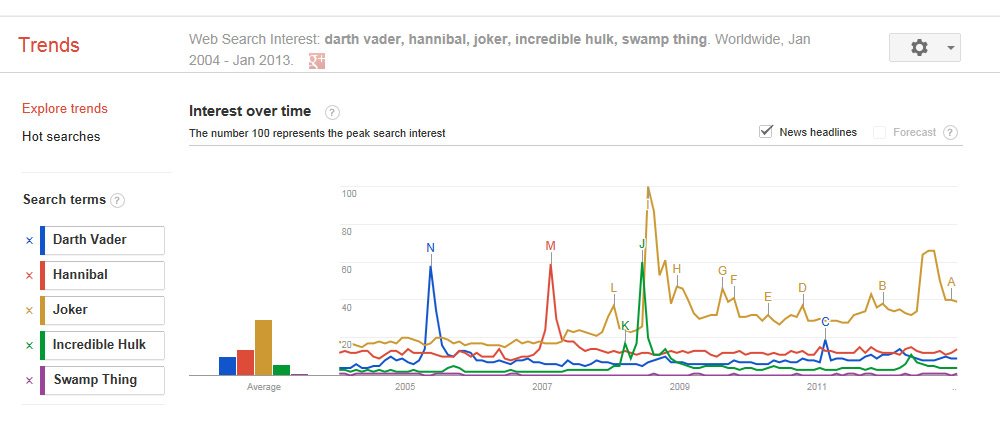
    These two monsters are not even close to matching the popularity and memorability to the rest of their evil monster-peers, even when combining both of their worldwide searches (tens of thousands vs. hundreds of thousands). Both of these monsters instill fear in others around them due to their superhuman strength and appearance, amongst other attributes. The mentioned monsters, however, also share similarities and have a good side to them. These monsters feel compassion. For this reason, they are the lone soldiers at the bottom of the list. I am certainly not discrediting these great monsters, just elaborating on the bigger picture that evil monsters win the hearts of individuals. As one jumps up the list we can see some notable monsters, with Joker and Darth Vader taking the top spots. So what makes Joker more memorable in this case than Darth Vader? They both are killers, but the Jokers visual appearance is more similar to humans, thus it may become easier for the general population to take interest in the evil traits of the monster. Thinking of why it is easier for people to acquire interest in evil monsters, we can look at the psychology attribute of the subject.

    Psychology has played a role in the way humans have acquired interest in evil monsters, in particular. Going back to the memorability/popularity of an evil monster, Joker, an audience will immediately notice his character has a smile on his face, similar to that of a clown. As mentioned in the Journal of General Psychology, the use of humor towards something typically considered dangerous may induce “. . . desensitization of fear or ambivalence toward a dangerous product” (Ventis, Higbee and Murdock). In addition to joking around often and not taking himself very seriously, the joker shows a general disregard to seriousness even when committing heinous acts. Although, this monster is a villain, he uses humor to ease others fears of accepting and trusting him. This concurs with the general findings in the study that use of “humor can facilitate change in an emotional response tendency like fear” (Ventis, Higbee and Murdock). Connecting the dots, an audience will see the use of humor in the monsters character may have desensitized people enough to the point where his popularity now is on the rise. It is safe to say, Joker has not always been a popular character, given that he is evil, but has made a comeback, even rivaling the good superhero that made him famous, Humor makes the evil monsters like Joker much more appealing to audiences and increases their own popularity or likelihood of being memorable and/or made popular. Focusing more on desensitization in our culture and monsters/monstrosity, there is a definitive trend allowing evil monsters to become more acceptable as well as memorable in our society.

    Figure 2 – Google Search Trends 2004-2013
    How Evil Monsters become Popular - Google Trends

    Monsters, particularly the evil and villainous ones, are becoming easier for people to like, enjoy, and even look up to, in part due to the amount of exposure monsters are receiving through various mediums and forms. Want to keep in touch with your evil monster daily? Check out their Facebook and Twitter accounts! With “1.11 billion monthly active users as of March 2013” (Facebook) social media sites are certainly making it easier for general population to connect with evil monsters and have real impact on the popularity and memorability of that monster. The popularity and memorability of evil monsters is on the rise everywhere and we find them in our restaurants, food, advertisements, toys, games and more. A visit to your local McDonald’s and you may see the newest popular monstrous toy out for kids, or flip on your TV or internet and you’ll see advertisements for the next horror story or ghost hunting episodes. The past decade has seen an explosion of famously evil monsters coming to life or back-to life on the big screen, such as Chucky, Darth Vader, Freddy vs. Jason, Hannibal, Hellraiser and the Minotaur (IMDB). We also see the exposure in all age groups to evil monsters through modern video games, including some notables like the Resident Evil, Mortal Kombat and Elder Scrolls series of monsters. New and old forms of media have helped sustain, spread and grow the memorability of evil monsters keeping the monsters surviving through to the next generation of mankind.

    The general population has accepted monsters and they have become engrained in our societies. Evil monsters have d played roles as some of the most memorable and reliable entities mankind has lived with since the earliest times. These monsters are alive and well with the people as seen in our entertainment, past history, ancient cultures, search trends, and even slipping into our lives subtly by psychological means. Evil monsters take on all types of forms and range from the not-so-bad to the not-so-good, the latter being available with increasing abundance. Take time to write down or think of a few of your favorite monsters of all time and your answers may just surprise you! How many of your favorite monsters are considered evil?

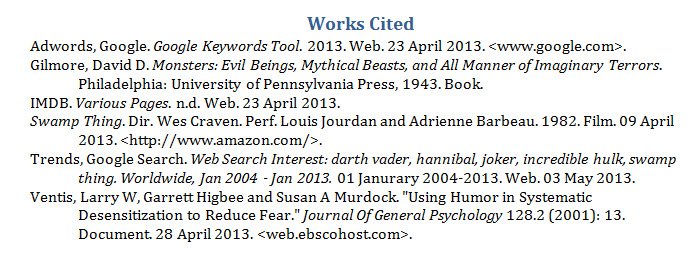
    Works Cited

    Adwords, Google. Google Keywords Tool. 2013. Web. 23 April 2013. www.google.com.
    Gilmore, David D. Monsters: Evil Beings, Mythical Beasts, and All Manner of Imaginary Terrors. Philadelphia: University of Pennsylvania Press, 1943. Book.

    IMDB. Various Pages. n.d. Web. 23 April 2013.

    Swamp Thing. Dir. Wes Craven. Perf. Louis Jourdan and Adrienne Barbeau. 1982. Film. 09 April 2013. .

    Trends, Google Search. Web Search Interest: darth vader, hannibal, joker, incredible hulk, swamp thing. Worldwide, Jan 2004 – Jan 2013. 01 Janurary 2004-2013. Web. 03 May 2013.

    Ventis, Larry W, Garrett Higbee and Susan A Murdock. “Using Humor in Systematic Desensitization to Reduce Fear.” Journal Of General Psychology 128.2 (2001): 13. Document. 28 April 2013. web.ebscohost.com.

    Works Cited - Magazine Essay

  • Trifles by Susan Glaspell – Alternate Analysis Essay for English 101

    Trifles by Susan Glaspell – Alternate Analysis Essay for English 101

    Tony Washington
    Hayden Bixby
    English 101
    26 November 2012

    Essay Requirements:

    • Write a 4-5 page essay in which you will consider the notion that “a play is a representation of the society in miniature”.
    • For Your Reference:

    • My first version essay on Susan Glaspell’s Trifles, contains alternate viewpoints on this play.
    • Works Cited (Citations)

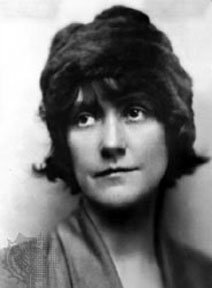
    “Trifles” by Susan Glaspell, is based in 1916 and is a one act play, set near the peak of the women’s suffrage movement. Glaspell was born in 1876 and lived an eventful life through 1948. Glaspell, a Pulitzer Prize winner, was very active in her community, founding the Provincetown Players in Provincetown during the summer of 1916. Trifles takes place in an empty farmhouse and tells the story of a murder mystery involving the married couple of Mrs. Wright and John Wright, the murder victim. Additionally, County Attorney – George Henderson, Henry Peters the sheriff, neighboring farmer and witness Lewis Hale. Mrs. Peters and Mrs. Hale are the two main protagonists and most importantly the main women who shape the story. Although, this play sounds pretty simple to start, being a murder mystery, it reveals some hidden truths not mentioned specifically in the title. Glaspell shows the significant and varying forms of oppression faced by women during the decades of the 1900s, predominately by their male counterparts.

    The symbols presented in the play show both the oppressive power the men hold and the contempt many women of the day held for their own husbands, accredited to the tough lifestyle they had to endure. A dead canary, which had been apparently killed with a rope around its neck, is the symbol of the oppression that many women faced from the opposite sex. Mrs. Wright is described by Mrs. Hale as “. . . kind of like a bird herself, real sweet and pretty”, “How – she – did change.” (Glaspell 8). In the story it is suspected that Mrs. Wright killed her husband and “Choked the life out of him” (Glaspell 10), similar to the dead canary. After long term oppression of anything, including women, the expression that life is being “choked” out would be an accurate term. Mrs. Wright herself goes from a sweet and pretty woman to being suspected of murder, those are two extreme opposites. The symbols of oppression including the dead canary and rope help to reveal the oppression in this story. For many people, oppression can only mean a resistance to growth and progress, something unnatural to human nature and character. In order to get a ‘leg-up’ on oppression, numbers play a notable role for women in the story. Women must rely on each other show cohesiveness together in order to influence events around them, which were often reserved for men in this era.

    Throughout the history of mankind, people have been brought together due to oppression, in the case of women living during the time of Mrs. Hales and Mrs. Peters, there were no exceptions. Through the oppression of women, the theme of comradery is brought to the forefront in the story. During this time, women had to be careful not overstep their boundaries set by men, as they were not seen as equivalent intellectually. Naturally, facing oppression with more than just oneself to carry the burden empower these women to directly affect outcomes and their own situations. The women display for the reader the unity, which is revealed in the story when the women stumble upon a quilting by Mrs. Wright, which is well put together except for one portion, described by Mrs. Hale as “. . . it looks as if she didn’t know what she was about!” (Glaspell 7). Since Mrs. Wright was under investigation for murder, the sporadic quilting would be seen as a red flag, as a mistake of this degree would be more than rare; married women of this day knew how to quilt well as they were homemakers and keepers. Mrs. Hale pulls out the odd stitch and additionally, the women take a dead canary with them before leaving the cabin, protecting and providing a sort of shield around Mrs. Wright, ‘one of their own’ so to speak. By masking and remaining quiet on some details to their male counterparts, the women outsmart the men and also show the unique ways women of this day helped themselves and others succeed through oppression. Comradery is an important character trait of women during this period of time and definitely in modern times today. Some could say this is how the women ‘leveled out the playing field’ for themselves. It must have been tough for women of this day to keep a determined outlook and attitude on their situation. Certainly, some women were satisfied and secure with their position and there were quite many others who weren’t, but the attitudes of the men kept consistent.

    In order to better understand the oppression women like Mrs. Wright endured, one must examine a common male attitude at the time, that being complacency with power. Unfortunately, these men seemed either unaware or unwilling to treat these women with much respect at all. Glaspell details an incident where the Count Attorney, “Kicks his foot against the pan under the sink” (Glaspell 4). In today’s modern world, most would find this offensive and rude, one could say, ‘try that at Grandma’s house’. The men of this day and age were both complacent and satisfied with their own oppressive nature and attitudes over women. Complacency can be both positive and negative, largely depending upon the situation and circumstance. Once an individual(s) get comfortable in a position that suits them, they are susceptible to the non-assuming factor of complacency. This complacency was shown not only through attitudes, but also through their language and dialogue to women.

    According to the dialogue of the play, the men show they do not deem what the women say important or relevant. Mrs. Peters says one comment on how Mrs. Wright worried about her fruit freezing, which it indeed had due to being left out. With haste, the Sheriff fires back, speaking to his male partners, “Well, can you beat women! Held for murder and worryin’ about her preserves” (Glaspell 3). The men agree in general about the Sheriffs comment, “Well, women are used to worrying over trifles” (Glaspell 3) , says Mr. Hale. The dialogue of the play shows the ignorance and general lack of respect given to women’s comments. Even the Sheriff speaks to his wife openly as if a women’s role in the home was meaningless. The prejudice from the men is obvious and brings questions about these men’s characters to the audience. Women had to push a little harder to get fair shots for multiple reasons. Looking at the plot of the play and politics near the time allows one to see this relation.

    The plot of the play tells of a woman, who seemingly, was up to her ends wit with her husband so much that she was now accused of murder, in essence cementing the unflattering reality of women during this era that faced a near lifetime of suppression and oppression by men. The oppressive power of men over women led to the US Government passing a bill called the Equal Pay Act of 1963, which finally outlawed wage discrimination on the basis of sex; specifically this bill would “. . . prohibit discrimination on account of sex in the payment of wages by employers engaged in commerce or in the production of goods for commerce.” (US Equal Employment Opportunity Commission). Power can corrupt and blind individuals, groups, businesses and yes, even governments. The addictive nature of power often provides the avenue for unintended, long-term consequences. Women’s suffrage (right to vote) was passed 3 years after the Glaspell released “Trifles” and it took decades of tireless women pushing the cause in order for them to even be paid an equal wage. Power rarely is relinquished without a struggle or fight, showing that the men of this era were no better equipped to handle this type of power than the women themselves.

    Americans will agree that we all want basic rights and “. . . among these are Life, Liberty, and the pursuit of Happiness.” (United States Congress). The women in the one act play put on display for the audience and/or reader the struggle involved with oppression faced by men during this era. Oppression and suppression is something that will not go away or disappear and people must remain vigilant to help prevent harm done to others. Everyone deserves a voice and the basic right to live their life to the fullest. As a society, the people have not won the battle for equality, but will win the war.

    Works Cited – Susan Glaspell – Trifles – Tony Washington

    1. Glaspell, Susan. Tifles. 1916. MyLiteratureLab. Web. 22 February 2012.
    2. United States Congress. “The Declaration of Independence: A Transcription.” 4 July 1776. National Archives and Records Administration. Web. 25 February 2012.
    3. US Equal Employment Opportunity Commission. The Equal Pay Act of 1963. 1963 May 14. Web. 18 November 2012.
  • “One Art” by Elizabeth Bishop – MLA Style Analysis Essay for English 101

    “One Art” by Elizabeth Bishop – MLA Style Analysis Essay for English 101

    Essay Requirements:

    For the poem selected, make a claim about how the LAST image or idea (the “ending”) is related to the meaning of the rest of the poem. Furthermore, consider how the formal elements of the poem help convey that meaning and attitude.

    Author Comments about Paper

    The use of my outside sources in this paper ended up with me losing some points on this assignment. The content was solid according to the teacher, however I must have not been clear on the use of outside sources when I turned the paper in. Overall, the poem “One Art” by Elizabeth Bishop is a unique look at loss and how it effects us.

    Introduction

    What are the first thoughts that come into the mind when hearing the word “Loss”? Losing is not a science or skill and some would argue that life is built to lose. A great way to help answer and focus in on some of these questions would be to read “One Art” by Elizabeth Bishop. Bishop, a Poet Laureate from 1949-1950 and a Pulitzer Prize winner in 1956 (PoemHunter) was very articulate and passionate in her writings. The poem “One Art” focuses on the art of losing and how to interpret loss. The last ideas given by Bishop coincide with the rest of the writings meanings, those including acceptance, compassion, realistic expectations, participation, and realizing the potential for positive growth. Through her writing, Bishop exhibits the attributes of loss one must be aware of in order to triumph over it.

    Body Paragraph 1

    Bishop encourages the reader to show acceptance and compassion to loss, as shown throughout and in the last stanza of her writing. The last stanza goes like so:

    “Even losing you (the joking voice, a gesture
    I love) I shan’t have lied. It’s evident
    the art of losing’s not too hard to master
    though it may look like (Write it!) like a disaster.” (Lines 16-19)

    In the last stanza the author wraps up the poem with a moment of compassionate thought during a loss, as she explains, “Even losing you (the joking voice, a gesture I love)” (16). Selecting her words carefully, “Love” is used only once in the poem, showing Bishops compassion and the words “Even losing you” mark the important tone of acceptance in the poem. These lines are one of the most direct references in the poem to a painful loss for Bishop. In addition to the latter, Bishop opens the poem with one line that will be seen throughout the poem, tellingly, “The art of losing isn’t hard to master” (1). This phrase or similar to that was repeated in four of six stanzas in the writing. The repetition she chooses in her stanzas gives a reader the sense of Bishop actually encouraging those to accept loss, given that, loss “. . . isn’t hard to master” (1).
    Loss is something that is repeated continuously throughout life as well as in Bishops poem. With the repetition of loss in “One Art”, Bishop provides opportunities for the reader to interpret it, one of those being the idea that a loss may at times appear more destructive in nature than they actually are.

    Body Paragraph 2

    Even with all the losses that life can bring, many times those losses have the appearance of something much worse than the reality; this is why realistic expectations are important for Bishop in defeating loss. These realistic expectations help guide her through unclear situations. Bishop shows the reader that losses are not always an actual disaster, “. . . though it may look like (Write it!)” (19). Bishop tells the reader to “Write it”, meaning to write a select losing scenario, like a disaster for example. Could one write a disaster or losing scenario with an exaggerated outcome than the reality of it? The short answer is – yes. Just in the past decade we had the scare of the Y2K crisis. This took place in the year of 2000 and there were many articles, interviews, and discussions of it. During this time it was safe to say that many were preparing for a very different world. As we know for a fact today in 2012, all writing and theories about a doomsday year of 2000 proved to be false. A loss on paper can always be scarier than the reality of it. A reader can take away from Bishops poem that “. . . though it may look like (Write it!)” (19) a seemingly guaranteed loss or disaster may in fact be exactly the opposite. The fear of loss can certainly bring people to act differently and affect their actions. Rather than fearing, the embracement of loss can be a good trait to learn and keep. Remembering that loss can also turn into growth, there is potential and opportunity for something entirely new and positive to come into play.

    Body Paragraph 3

    Embracing loss can be a wonderful thing when you accept it, being that not all loss will lead to disaster and has potential to grow into something healthy and bountiful once again. Bishop expands on this idea of potential for growth out of loss and appears to assist Bishop to get over loss itself. Further she explains to the reader the numerous losses she has taken, such as vast realms of property once owned and “. . . two rivers, a continent” (14), “I miss them, but it wasn’t a disaster” (15). Digging for more answers, we can find abundant clues on times when a loss isn’t actually a complete disaster. Take the eruption on May of 1980 of Mt. St Helens in Washington State. The instant of the eruption there was instantaneous death and destruction of all natural and man-made structures near the blast zone. Effecting approximately 230-square miles, many areas that received the brunt of the blast looked much like a wasteland. Some of the first plant life returned to the affected area of Mt. St Helens years later around 1984, while Elk were spotted just a few weeks after initial blast. In addition to the birds, gophers, plant life and other wild life returning to the area, the blast zone is becoming the breeding ground for new life and abundance. (Mount St. Helens, Washington Life Returns to Mount St. Helens). It is understandable for one to miss the loss of what Mt. St Helens used to be, pre 1980 eruption, “. . .but it wasn’t a disaster” (15). From this example, it becomes clearer for a reader that in order to triumph over loss; there must also be participation in loss.

    Body Paragraph 4

    Bishop clearly encourages the reader’s actual participation in loss from her writing, harping back on that phrase many have or will hear sometime in their lives, “Practice Makes Perfect”. With more practice, one is trained and disciplined, therefore could handle loss more efficiently. The encouragement of participation in loss is readily apparent in the third stanza of the poem, with the idea being that by promoting the acceptance of loss, one may have an easier time triumphing over it. The author reminds the reader about daily loss, which would be considered normal, such as forgetting “. . . places, and names” (8). Bishop further directs the reader to, “practice losing farther, losing faster” (7). Living daily life is the practice for learning to lose quickly and/or more efficiently. At times we may forget what it is or who we are losing and why, due to the “practice” of losing. This is relatable to young individuals, during the first decade or two of life, everything seems new and exciting, but as they age, they lose interest and excitement on aspects that once would seem irresistible. From commonality and repetition, this kind of loss is no disaster for one’s life, as age does bring its own new experiences. This practice of learning to lose is achieved over time and is something everyone must accept sooner or later.

    Conclusion

    Bishop paints a picture clearer than most may care to think about loss. She shows through her writing that in order to triumph over loss, one must learn the attributes of acceptance, compassion, participation, realistic expectations, and realizing the potential for positive growth. She reminds us through the writing that the art of losing doesn’t mean disaster. There is a positive message made out of loss, even with all of the loss detailed in the writing. Next time you are dealing with a loss, positive or negative, remember it most likely won’t be a disaster and could very well be a learning lesson. What have you lost today?

    Works Cited

    “PoemHunter.” n.d. Biography of Elizabeth Bishop. Web. 08 Oct 2012.

    “Mount St. Helens, Washington Life Returns to Mount St. Helens.” 30 Sept 2004. USGS Cascades Volcano Observatory (CVO). Web. 08 Oct 2012.

    Tomajczyk , Stephen F. 101 Ways to Survive the Y2K Crisis. St. Martin’s Griffin, 1999. Web.

  • Computer Technology in Our Future – Essay for Computer Info Systems

    Author: Essay by Tony Washington – January 23rd 2012. This was a fun essay to write since I was not being graded on how well I could write 🙂

    Computer Technology in Our Future – 2012

    When thinking about the way we use computers every day, it is hard to imagine life without them. From sunrise to sundown, computers find their way into our lives whether we realize it or not. There are people who believe there is no downside to the role technology plays in modern day society. Individuals are becoming entirely dependent upon computer technology, thus are failing to learn the skills needed to function without its assistance.

    “No generation has yet lived from cradle to grave in the digital era,” say authors John Palfrey and Urs Gasser, in “Born Digital”. This book gives another look at technology in the eyes of the individual who has not only been surrounded by technology, but enveloped by it. They also bring to the point, “Digital Natives live much of their lives online, without distinguishing between the online and the offline” (Palfrey and Gasser 4).In this instance, “digital native” would be any individual who was “born after 1980” (Palfrey and Gasser 1). These individuals are typically completely comfortable with the computer technology that surrounds them in their daily lives.

    One of the most ancient forms of communication known as hand writing is being replaced by typing. Even with the invention of the typewriter, it was still not uncommon to handwrite memos, letters, and academic papers. According to the Sue Loughlin from Tribune Star, “. . . the Indiana Department of Education will no longer require Indiana’s public schools to teach cursive writing,” which gives a quick insight at technology taking a precedence even in education. With the move away from writing in schools, educational institutions are promoting computer keyboarding and putting it on an “equal” playing field with hand writing.

    “The constant use of digital technologies can place a strain on families, friendships, and classrooms,” (Palfrey and Gasser 186). Thinking of the shear amount of time we devote online interacting in some form digitally, you may find the majority of your day is consumed by it. Not to say this applies to everyone, but for most technology is becoming an increasingly important aspect as it touches all areas of our life and world. The downside to being digitally connected constantly is that we never get a real chance to go unconnected. Instead of waking up and stretching, you may wake up and check your cell phone first; digital technology is changing almost every part of our lives.

    With technology rapidly expanding, even our navigation is evolving around us. Navigation of some sort has long been a part of nearly every day life for most. Navigation is important for everything including trade, farming, flight, and sailing. No less than 30 years ago, people were still using maps as a common way to navigate, which has been replaced with the Global Positioning System (GPS). Every occupation from the pilots, police, fire departments, emergency medical services, and more rely on some form of GPS in their day to day work. If one were to ever get lost 30 years ago, there may have been the handy road map in the glove compartment, but now is virtually always replaced by the GPS unit.

    Information is a powerful tool, but too much of a good thing can spoil the goods quickly when used in excess. “The value of creativity, imagination and critical thinking over “information” access is self-evident,” says Andrew Orlowski of The Register. With so many users and governments undertaking information technology as a core utility for nearly all tasks, we undertake a risk of simply forgetting how we perform duties without them. Heavy use of technology from young users may create a “problem-solving deficit disorder” (Orlowski). Think of it as skipping a couple of grades due to your ability to research material on the internet, however once you get to the advanced grade level, you are unequipped with the tools necessary to succeed due to overuse of technology resources.

    For the average person in the IT world, every colleague or friend they know probably has computer and internet access at their homes. With the ease of use to “instantly” retrieve information from search engines, such as Google, Yahoo, and Bing, is there a possibility that individuals are becoming more unwilling to find other resources that are not electronic? Speaking with a fellow student attending Edmonds Community College, “I don’t know what I would do without my computer and internet,” said John Brown in a personal interview. Before the dawn of the internet age, most people used services like 411, phonebooks, or even their neighbors to retrieve information quickly. Fast forward to 2012, and you will find most of these services becoming more “irrelevant” in people’s daily lives. Why take the effort to look through papers or asking a neighbor, when you can just “Google” it?

    In a society that sees individuals becoming so entirely dependent on computer technology, they may find that some tasks aren’t so easily performed without the assistance of it by their side. The future of technology is all about how we choose to use, promote, and take advantage of this incredible resource. Deciding the future we give to the world and our loved ones is our decision to make. Caution must be observed as with everything, so that the rapidly evolving technology around us does not become our very own “Achilles” heel.

    Household   Internet Usage In and Outside of the Home

    Characteristics per 1,000 Households

    In Home

    Anywhere

    No Internet Use

    Households (Percentage)

    71.06

    80.23

    19.77

    (U.S. Department of Commerce)

    Works Cited

    Brown, John. Personal Interview on Computer Technology Tony Washington. 20 January 2012.

    Loughlin, Sue. Archaic Method? Cursive writing no longer has to be taught. 3 July 2011. 1 January 2012 .

    Orlowski, Andrew. How computers make kids dumb. 21 March 2005. 20 January 2012 .
    Palfrey, John and Urs Gasser. Born Digital. New York: Basic Books, 2008.

    U.S. Department of Commerce, National Telecommunications and Information Administration. “Digital Nation: Expanding Internet Usage.” Household Internet Usage In and Outside of the Home by Selected Characteristics: 2010. 2011.

  • The Mother by Gwendolyn Brooks – Analysis Essay for English 101

    The Mother by Gwendolyn Brooks – Analysis Essay for English 101

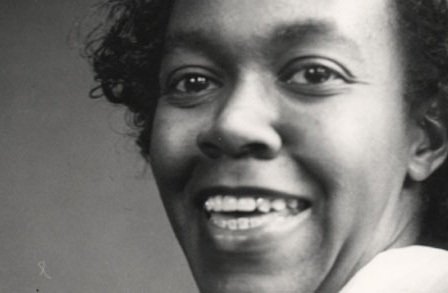
    Analysis essay of, “The Mother” by Gwendolyn Brooks. This paper focuses on the “dramatic situation” and how the speakers attitude about that situation changes throughout the poem. Additionally the essay considers how the formal elements of the poem help convey that meaning and attitude.

    Introduction

    When thinking about personal experiences, “The Mother” by Gwendolyn Brooks touches on the often emotional topic of abortion. This poem was produced decades ago, yet still remains relevant to this day. Accepting abortion and the outcome can indeed be a challenging task for many, while others adapt to it without much of a problem. Gwendolyn Brooks writing allows us to take a look at the mothers view point of abortion and how a mother responds to her unique situation. Throughout the poem the speaker shows signs of grief concerning the topic of abortion and its outcomes by presenting to us her point of view, memories, love, subtle triggers, and confusion.

    Body

    From the first stanza of the poem, the speaker provides us a quick snapshot of her feelings about the abortion. The first stanza is set in a second person point of view, with much of it explaining how her children will never realize certain fulfillments in life. Reading the second stanza in the poem, there is a sudden change to a first person point of view, where the speaker references herself multiple times. From this section in the reading, it becomes apparent this is much more of a personal matter to the narrator.

    In the beginning of the poem the speaker shows a mother unable to forget the dramatic events, which have trapped her emotionally. We can see an example of the narrator facing more than one painful memory of abortion in the very first line, “Abortions will not let you forget”; followed by a mention in the first line of the second stanza, “…voices of my dim killed children”. Both the words “abortions” and “children” are given plural reference, which can be interpreted to mean more than one abortion is being spoken of in the writing. The memories of a mother dealing with the hardship of one abortion is hard enough, while additional abortions just adds to the discomfort of a grieving mother. What about the relationship between the narrator and her unborn children? Does she actually love them?

    Not having a loved one around can dramatically change a person or entire family. Losing more than one loved one only compounds the emotional impacts of grieving. We can take a present day example from military members, who are away from their families for extended periods, causing both anxiety and grief. If the mother really loves her children, it is understandable why she may grieve over them. This notion is conveyed in the second to last line of the poem when the speaker says, “Believe me, I loved you all”. This line confirms the speakers love for her would-be children. Grief and love may go hand in hand together, especially when the love is true and viable. Most families and individuals agree separation from a loved one, can most certainly set off processes of grieving.

    Expressions and signs of grief vary by the individual and the unique circumstance. At times, something very subtle yet so simple may set off the emotional response of grief. The speaker tells the audience that as a mother she would never see the opportunity to, “buy with a sweet,” (line 6) her children. This references encouraging your child to comply with your wishes, with the commonly used treat or snack. These simple triggers show just one of the many memories she will never find due to the outcome of her abortions. Other than the very subtle triggers of grief, mixed emotions can play a major part in a grieving soul.

    Confusion is definitely a factor in the reading, which is a relatable attribute to grief. Confusion appears as one of the longer lasting results of her abortions. Near the end of the poem, the narrator is speaking of her abortions:
    “Since anyhow you are dead.
    Or rather, or instead,
    You were never made
    But that too, I am afraid,” (29-30).
    The reader can also see 3 ideas given in the four lines. Digging into the meaning of the lines we see she believed the aborted children to be dead; or perhaps or potentially, never created; followed by confirming all of the aforementioned ideas to be discouraging and scary to believe. With a mix of both confusion and denial, the narrator shows disagreement with herself about the ideas and thoughts she is facing. Confusion is a natural occurrence, especially for a grieving mother, who has gone through more than one abortion.

    Conclusion

    While reading through the entirety of the poem, the narrator provides the reader clear signs of grief via confusion, subtle triggers, love, memories, and the point of view of a mother. The speaker confirms for us the love she has for her dead children as well as the painful memories, which expose themselves during the process of grief. Reading the poem also reveals the fact this is not the only abortion the speaker is writing of, proving to be a major contributor to the grieving in the poem. The poem is a great read for any first timer or anyone experienced with poetry. With a variety of topics throughout the poem, one may find that there is more than just grief, which shows itself in the poem. Other than abortion, one must ask what other major attributes play a part in this amazing poem by Brooks?


    Works Cited

    Brooks, Gwendolyn. “The Mother”. Poetry Archive. New Directions, 2002. Web. 12 Jan 2012.

  • The Lesson by Toni Cade Bambara – Analysis Essay for English 101

    The Lesson by Toni Cade Bambara – Analysis Essay for English 101

    Short Fiction Analysis Essay focusing on the notion that “literature is political” and the comment the story makes about the characters socio-economic position

    Introduction

    It is February, which means that it is officially Black History Month. Take “The Lesson” by Toni Cade Bambara as just the story to diversify any reading list with some authors who aren’t so familiar. Bambara was born in 1935 (Schirack) and was an active participant in the civil and women’s rights movements that helped to shape the culture of the 70’s. Virtually all people want the right to a decent life and education, no one argues that. Not everyone grows up the same way or with the same privileges, which is generally understood. Bambara’s, “The Lesson” shows the story of young children growing up in poverty and how an educator creates the environment to help them not only discover, but succeed in learning some very important issues about their immediate world around them. Education for those children in poverty stricken neighborhoods, such as Sylvia’s, proves itself difficult to acquire, however is essentially the best way to move beyond poverty; shown by the way of role models, attitudes towards others, first impressions, exposure, realizations, and Miss Moore the educator.

    Body

    Today, it would be hard to fathom virtually an entire community that lacks an education. Miss Moore was the only educated black woman in Sylvia and Sugars neighborhood. Sylvia and Sugar are best friends and also cousins, they share in the experiences and lessons taught from Miss Moore. She is the primary resource of education for both girls during the story. Being educated, this made Miss Moore a rare spectacle as most children would likely “go to the pool or to the show where it’s cool” (Bambara), however Sylvia and Sugar were being forced to meet with Miss Moore by their parents. From the parent’s point of view, “. . . it was only right that she should take responsibility for the young ones’ education” (Bambara). The parents themselves realize this is very important for their children, but they do not necessarily take their own advice and at times fail to meet some of their own obligations for the children.
    Parents, who live in poverty stricken neighborhoods, are not always the best role models they could be for their children, discouraging them. At times they are even displeased towards role models like Miss Moore in their own communities for no apparent reason. Sylvia herself notices this type of treatment when she hears the grown-ups speaking about Miss More, “behind her back like a dog” (Bambara). Although, the parents will “shape and crisp up our clothes” (Bambara), before they present their children to Miss Moore. We see a double standard displayed by parents talking about another behind their back, but never saying a word to Miss Moore directly. If the parents are speaking of Miss Moore, behind her back, what becomes of children like Sylvia’s attitudes towards education and their educators? One must wonder what they held against her, other than her education. The parents show a type of persona that is unfortunate towards Miss Moore.

    Sylvia and Sugar both display negative attitudes toward Miss Moore, applying similar views of education and educators as their role models. They “kinda hated her too,” (Bambara), mentioned Sylvia early on. Most parents can agree that children soak up all kinds of traits from others they hear, meet, and speak with. During this time, we know that Sylvia hears fellow grown adults talking distastefully about Miss Moore. If a child is brought up in an environment of negativity for extended periods of time, they may mimic characteristics of that environment to others around them. This negative attitude towards the only educator around them can be puzzling to understand, but presents itself as one of the challenges of acquiring a decent education in their neighborhood. The children like Sylvia and Sugar are still learning and are absorbing new thoughts all the time.

    First impressions are vital for children like Sylvia, as this is the very first judgment they make on whatever the particular issue at hand may be. Miss Moore brings the children to downtown New York for a field trip to FAO Schwarz, for one of her lessons that day. After arriving on Fifth Ave, it appears this becomes the first real impression the kids have ever had of white folk. Again, keeping in mind the period of time this was in, and the remembering that these children live daily staring at poverty. The first impression is that white folk are very much different from them, with fancy clothes or so Sylvia says, “. . . everybody dressed up in stockings. One lady in a fur coat, hot as it is. White folks crazy” (Bambara). Additionally, Sylvia’s cousin, Sugar asks Miss Moore, “Can We Steal?” when they are nearing FAO Schwarz toy store. This would seem to be a no-brainer answer for most, but she was asking a legitimate question on her own behalf. These comments are genuine feelings spoken from the mouths of Sylvia and Sugar. It is accepted that when experiencing something new, a no-brainer question to some, will be inquired about from others as part of new processes. Broadening a young mind by viewing how others are different or relate to them is an important part of education.

    Being exposed to situations, which are unfamiliar and unknown, can be a significant learning lesson for the young. Sylvia had always considered herself very outgoing and a risk taker. She openly acknowledged in the story that “Back in the days . . . me and Sugar were the only ones just right,” (Bambara). However, during the field trip Miss Moore takes them on, she fails to have enough confidence to enter the door first at FAO Schwarz, instead opting to “kinda hang back” (Bambara). This is the same girl who went, “. . . into the Catholic church on a dare” (Bambara) and now displays a timid, shy, and embarrassed side of herself, declining to be the first to enter. Sylvia starts to wonder why she is holding back, as this usually does not happen. For the first time Sylvia sets back, and begins to learn a lesson from the toy store field trip. Feeling out of place is a normal and the experiences and lessons taken from Fifth Ave continue to expand their minds to new revelations.

    If one does not realize they are in a specific type of situation, they may either remain in the situation or will ultimately escape it, education is crucial to obtaining the knowledge to do the latter. Sylvia and Sugar do not realize they are growing up in poverty until Miss Moore the educator teaches them this lesson. Miss Moore escorts the kids out of the toy store and finally asks them their own thoughts about the trip. Sylvia is angry because there is nothing she can afford to buy, thus left to window shop all of the toys for the day. Sugar tells Miss Moore that “this is not much of a democracy if you ask me.” (Bambara); feeling a serious divide between what some can afford and others cannot. At this time Sylvia herself thinks, “something weird is goin on, I can feel it in my chest” (Bambara). That “weird” is finally realizing that they are indeed living a life in poverty, the opposite of wealth. Although, this does not stop them from achieving more, it puts some questions they may have had in perspective. Without the opportunity of education like this, they may have remained ignorant to these facts. To have the young children speaking about this openly to each other is a great step in the right direction.

    Miss Moore’s education to the children, such as Sylvia, proves to be a very important and valuable resource the kids obtain. Miss Moore represents a consistent and dynamic personality throughout the story for the kids. She is able to give the children’s mind exercise and put them through enough working scenarios for the material to “click” for them. By providing the children opportunities like fields trips to Fifth Avenue in New York or “next week’s lesson on brotherhood” (Bambara), she captures the children’s attention by bringing in a variety of routines. Without this type of role model and educator, such as Miss Moore, the kids would never have questions like, “Equal chance to pursue happiness means an equal crack at the dough, don’t it?” (Bambara).

    Conclusion

    The value of education for the children end up outweighing the obstacles these children must face, when growing up in poverty. Readers of this story are reminded of both the difficulty and the value of education through Sylvia and Sugars realizations, exposure to the unknown, first impressions, attitudes, role models, and Miss Moore the educator. Miss Moore gives many opportunities for the children to take advantage of the best gift being given to them, education. They go from being close minded about some issues regarding poverty and their own statuses, to realizing the bigger and more important issues they should be concerned about. Communities must make sure to endow their children with education properly. A Miss Moore in every community like Sylvia’s and Sugars would certainly go a long ways. What can you recommend to your community to help improve education?


    Works Cited

    Bambara, Toni Cade. The Lesson. 1972. Web. 2 2 2012.

    Schirack, Maureen. Toni Cade Bambara. Ed. Lauren Curtright. 11 08 2004. Web. 12 02 2012.

  • Trifles by Susan Glaspell – Analysis Essay for English 101

    Trifles by Susan Glaspell – Analysis Essay for English 101

    Drama Analysis Essay focusing on the notion that “a play is a representation of the society in miniature”

    Introduction

    “We hold these truths to be self-evident, that all men are created equal, that they are endowed by their Creator with certain unalienable Rights, that among these are Life, Liberty, and the pursuit of Happiness.” (United States Congress, The Declaration of Independence: A Transcription). There is no mention of women in the declaration and the United States as a country took a while to adopt these positions for all individuals. Not until 1920 did women achieve the right to vote legally (United States Congress, The Constitution: The 19th Amendment). “Trifles” by Susan Glaspell, is based in 1916 and is a one act play, which includes elements of what the women’s suffrage movement was all about. Upon graduating from Iowa’s Drake University in 1899, Glaspell kicked off her writing career of writing short stories and novels (Ozieblo). The play from Glaspell tells the story of a murder mystery involving the married couple of Mrs. Wright and her husband, the murder victim, John Wright; this story also incorporates the mood of society at the time towards women, their social status viewed as beneath that of a male. “Trifles” shows the discriminatory mentality commonly accepted among men towards women in 1916, as well as showcasing the significant role comradery plays for women in equaling out playing field for their selves; portrayed through the plays expositions, dialogue, theme, character, and symbolization.

    Body

    The characters of the play consist of Mrs. Wright, John Wright, county attorney George Henderson, Henry Peters the sheriff, neighboring farmer and witness Lewis Hale. This leaves the two main protagonists in the story of Mrs. Peters and Mrs. Hale, the respective wives of Henry Peters and Lewis Hale. The murder mystery takes place in the empty farmhouse of John Wright. The men take charge of the investigation and leave the women to pick up a few items for Mrs. Wright’s convenience.

    From the start of the murder mystery come early expositions into the perspectives of the males less than equal attitudes towards women. During a routine investigation Mr. Hale` is explaining his encounter to the county attorney and his reasoning for visiting John, mainly being an attempt to convince John, for the second time, to buy a telephone. Also believing his chances would increase for a more desirable answer, he hoped for Johns wife to be present, saying, ” . . . though I said to Harry that I didn’t know as what his wife wanted made much difference to John” (Glaspell 2). This comment throws a hint to the audience about John’s attitude toward his wife, as if John was the type of husband who neglected considering Mrs. Wrights wishes. The County Attorney tells Mr. Hale, “. . . I do not want to talk about that” (Glaspell 2) brushing off the subtle clue promptly. The first note taken by the county attorney was only incriminating to Mrs. Wright, noting a scared look on the face of Mrs. Wright according to further testimony by Mr. Hale who continued to highlight, “. . . maybe it wasn’t scared” (Glaspell 3). The County Attorney does not care how John may have treated his wife, instead targeting Mr. Hale’s statement regarding the alleged “scared” look on Mr. Wrights face. Limited consideration is also taken for women during this time when spoken to by a man. The men’s bias is often and openly expressed to the women verbally.

    According to the dialogue of the play, the men show they do not deem what the women say important or relevant. Mrs. Peters says one comment on how Mrs. Wright worried about her fruit freezing, which it indeed had due to being left out. With haste, the Sheriff fires back, speaking to his male partners, “Well, can you beat women! Held for murder and worryin’ about her preserves” (Glaspell 3). The men agree in general about the Sheriffs comment, “Well, women are used to worrying over trifles” (Glaspell 3) , says Mr. Hale. The dialogue of the play shows the ignorance and general lack of respect given to women’s comments. Even the Sheriff speaks to his wife openly as if a women’s role in the home was meaningless. For the first words spoken out of the mouth from his wife, the harassment appears irrational for just making conversation. The prejudice from the men is obvious and once a reader or audience starts asking questions about how the men treat the women, a trend is noticed regarding the men’s principles.

    Undoubtedly the common theme in this play from the men’s side is a lack of support the golden rule. The golden rule is commonly understood to mean “One should treat others as one would like others to treat oneself” (Wikipedia Contributors). The County Attorney kicks his foot against the pans underneath the sink after finding no clean towels, telling the women “Not much of a housekeeper, would you say ladies?” (Glaspell 4). What kind of person kicks another individuals cookware for reasons like so? At a time where a kitchen was a place dominated by the women as the homemaker, this shows the lack of respect given to the women’s main domain. An audience or reader may wonder if Mrs. Wright was present, whether the Sheriff would choose the same decision to kick his foot against the pots. Similar to the men, the women are more uniform in ideals, but do not display the type of discriminatory bias the men have.

    As Mrs. Peters and Mrs. Hale gather belongings for Mrs. Wright, oppression is symbolized in a unique way via a dead canary bird with a rope around its neck. Mrs. Hale finds the dead bird in a box of Mrs. Wrights and tells Mrs. Peters “She used to sing. He killed that too” (Glaspell 9) explaining the type of marriage Mrs. Wright had. The bird with a rope around its neck communicates with the audience or reader the life Mrs. Wright lived after marriage with her husband. Mrs. Wright was a free woman and then restricted and isolated from the things she loved. Long gone were the days when Mrs. Wright “. . . stood up there in choir and sang” (Glaspell 10). Singing was shut out from her life and the rope around John Wright’s neck restricted his life in the same way. Compassion is shown by both Mrs. Peters and Mrs. Hale in defense of Mrs. Wright.
    Both women have a comradery that determines the outcome of Mrs. Wright’s fate in a much larger way than the men, by humbling themselves to their fellow woman and outsmarting the men. Mrs. Hale ultimately takes the dead bird in her pocket in order to keep it hidden from the men and to protect Mrs. Wright. “We don’t know who killed that bird” (Glaspell 10) said Mrs. Peters, although an audience or reader of the play would be able to assume some sort of association with the rope around the neck of John Wright and the dead bird. Both women know something about this bird connects with the case and would be very valuable to the murder investigation, yet they are humble towards Mrs. Wright and her life. Mrs. Peters and Mrs. Hale help to disprove, “. . . a motive; something to show anger, or – sudden feeling.” (Glaspell 6), which are the keys to the case according to the Sheriff. Eliminating the bird with a rope around its neck takes care of a solid piece of evidence, which would certainly be used against Mrs. Wright. From fruit preserves to nearly solving a murder case, the women do not give the men a clue as to what they have discovered from their time in the Wright residence.

    Conclusion

    This play incorporates the mood of society at the time towards women, their social status viewed as beneath that of a male; while showing just how prominent a role comradery effects situations for women like Mrs. Hale and Mrs. Peters. 1916 was a time near the peak of women’s suffrage as women all over the nation had begun to stand up against the prejudice and discriminatory ways of their male counterparts. The women and not the men gather the clues to the murder mystery, while additionally changing the odds in favor of Mrs. Wright’s innocence, showcasing the importance and significance of comradery during the 1900s between every day women. The women challenge the status quo of male dominance reigning supreme for everything. Bringing the story into terms for today, one may still see women outsmarting the men in some areas like organization. The United States has been a nation that has experienced groups of people willing to fight hard enough for their freedoms no matter what the cost. Mrs. Peters and Mrs. Hale help the audience visualize some of the fight and what is takes to win back your own liberty.


    Works Cited

    Glaspell, Susan. Tifles. 1916. MyLiteratureLab. Web. 22 February 2012.

    Ozieblo, Barbara. “About Susan Glaspell.” 2010. International Susan Glaspell Society. Web. 25 February 2012.

    United States Congress. “The Constitution: The 19th Amendment.” 18 August 1920. National Archive and Records Administration. Web. 25 February 2012.

    —. “The Declaration of Independence: A Transcription.” 4 July 1776. National Archives and Records Administration. Web. 25 February 2012.

    Wikipedia Contributors. The Golden Rule. Vers. 477898481. 20 February 2012. Web. 23 February 2012.